petits lecteurs.Little readers. Two languages.Parent notes ↗

THE FRENCH READING BOOKSHELF

English comes naturally.
French grows page by page.

Good books for children who live mostly in English and are learning to read in French. Start with what they can do today.

01 / SOUND IT OUT

Small books. Real progress.

For children learning to connect French letters and sounds, even if they already read English.

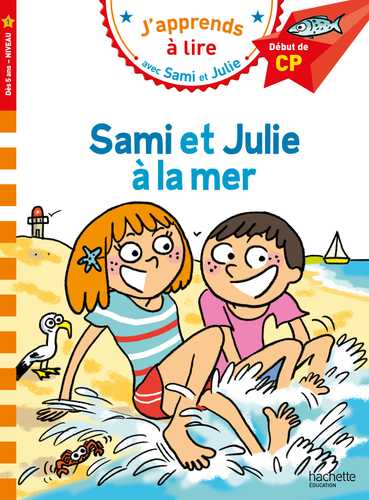
Cover of Sami et Julie à la merA FIRST SHELF PICK
FIRST DECODING · GRADED READER

Sami et Julie à la mer

A concrete seaside setting gives children something familiar to talk about while they practise reading in French.

Choose this edition: CP niveau 1 (début de CP). Other books in the series have different difficulty levels.

Why it fits & how to read it

Use it once your child knows the French sound–spelling patterns needed on the page. Talk about beach vocabulary first, then let them decode a short passage. The pictures support meaning; encourage reading the letters rather than guessing from the picture.

Publisher’s level is a guide, not a guarantee of independent reading.
See publisher & edition ↗
COLLECTION TO EXPLORE

Premiers livres
à lire seul

Lecture phonétique Montessori

HATIER
FIRST DECODING · COLLECTION

A phonics-focused starting point

A collection to consider when your child needs manageable French decoding practice before tackling ordinary picture books.

Best fit: A child beginning to blend French sounds into words. Check a sample against the sound patterns they have already learned.

Why it fits & how to read it

Choose the easiest suitable volume rather than jumping ahead because your child reads well in English. Read a small amount, explain unfamiliar words, and return to the same passage until it feels comfortable.

This is a collection recommendation; titles and their demands vary. “Montessori” alone does not establish a reading level.

Explore the publisher’s collection ↗

02 / TAKE TURNS

A little help. A bigger story.

For children who can read short French sentences but still need vocabulary and pronunciation support.

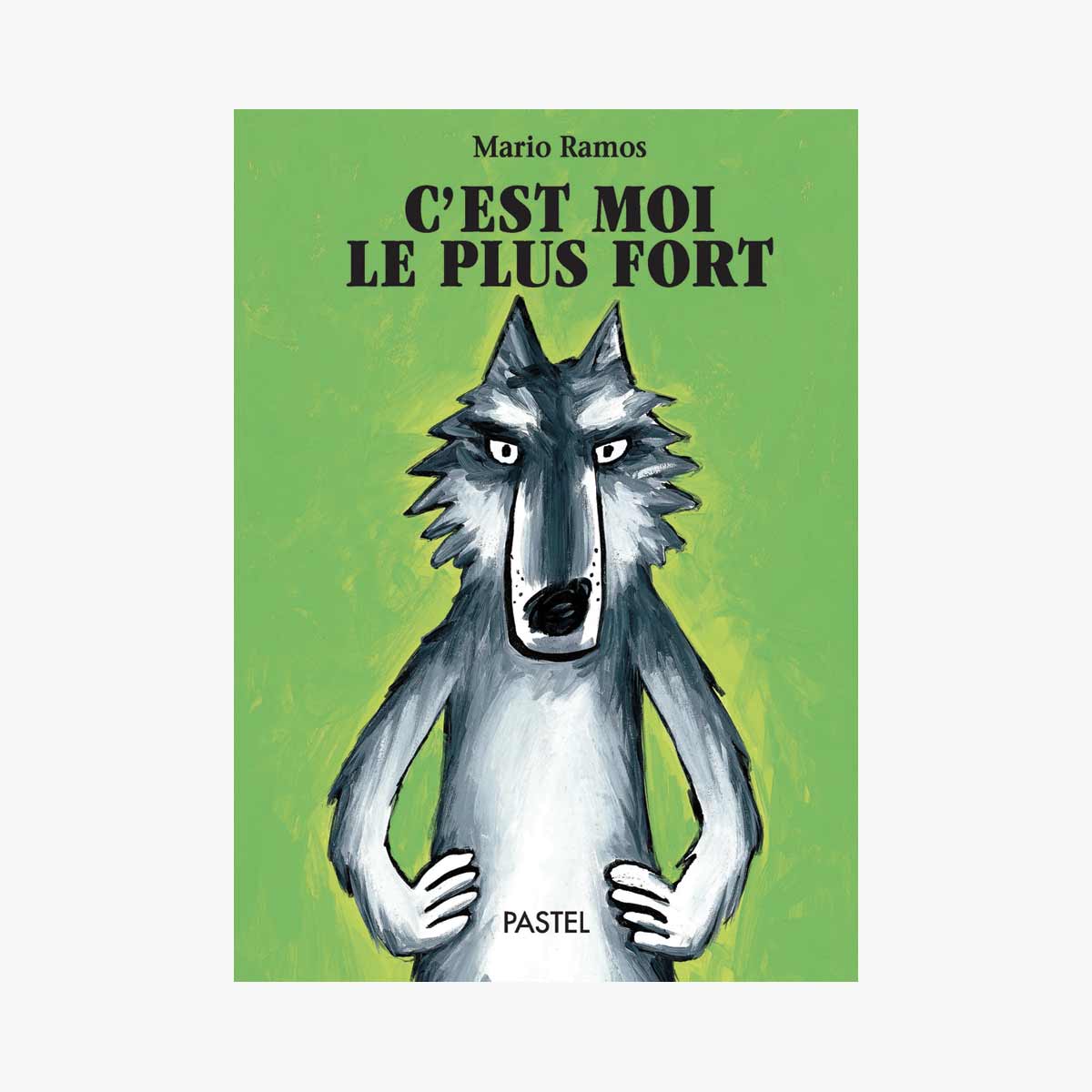
Cover of C’est moi le plus fort by Mario RamosFOR EXPRESSIVE READ-ALOUDS
SHARED READING · PICTURE BOOK

C’est moi le plus fort

A boastful wolf, familiar fairy-tale characters, and a satisfying reversal. Repeated dialogue gives a child a part to make their own.

Best fit: A child who enjoys performing a repeated line while an adult handles the less familiar language.

Why it fits & how to read it

Read the story aloud first. On a second reading, invite your child to read the wolf’s recurring question. Discuss who he meets and why the ending is funny, in English if needed.

This is an ordinary French picture book, not a systematically decodable reader. Its young audience label does not make every word easy to read.

See publisher & editions ↗
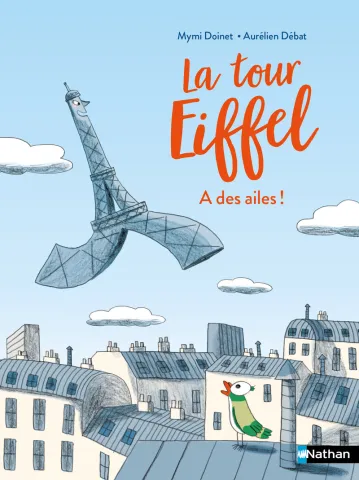
Cover of La Tour Eiffel a des ailes, Lune Bleue editionA PLAYFUL STEP FORWARD
SUPPORTED READING · SHORT FICTION

La Tour Eiffel a des ailes !

An unexpected adventure for a very recognisable Paris landmark. A playful premise can make rereading feel worthwhile.

Choose this edition: Lune Bleue, roman, ISBN 9782095034214. There is also a different picture-book edition.

Why it fits & how to read it

Try a sample together. Let your child read the sentences they can manage and take over when the language becomes tiring. Before reading, talk about the tower and what it would mean for it to have wings.

Nathan’s “dès 6 ans” is an audience label, not a bilingual proficiency measure. This is a step beyond first decoding practice.

See publisher & edition ↗

03 / FOLLOW THE STORY

Ready for “one more chapter”?

For children who can follow connected French text and explain what happened, with occasional help.

HUMOUR & AN UNLIKELY HERO

Chien Pourri !

A series to grow into

L’ÉCOLE DES LOISIRS
LONGER READING · ILLUSTRATED FICTION

Chien Pourri !

A scruffy, kind-hearted dog discovers a world that is not always as kind as he is. A strong choice for children drawn to absurd humour.

Best fit: Readers comfortable with short narratives who can ask about unfamiliar expressions and jokes.

Why it fits & how to read it

Start as a shared read and gradually hand over longer passages. Pause for a joke or a misunderstanding rather than translating every sentence. Wordplay can be harder than decoding the words themselves.

If understanding breaks down repeatedly, keep it as an adult read-aloud and use an easier book for the child’s reading practice.

Explore the publisher’s series ↗
A BRIDGE FROM A FAMILIAR SERIES

La cabane
magique

La vallée des dinosaures

BAYARD JEUNESSE
LONGER READING · CHAPTER BOOK

La vallée des dinosaures

The French edition of a familiar Magic Tree House adventure can give an English reader a useful foothold in a longer story.

Best fit: A child who can sustain several pages in French. Prior knowledge of the English story may help with the plot.

Why it fits & how to read it

Recall the English story before beginning, then read a short French section. Ask your child to explain what happened; understanding matters as much as getting the words out.

Familiarity does not remove the vocabulary challenge. Look for the prose novel (ISBN 9782747018340); the same title also exists in a graphic adaptation.

Check the novel edition ↗

AT HOME / KEEP IT ENJOYABLE

Let the story stay bigger than the struggle.

01

Try a page together

Can they read most of it and tell you what happened? If every sentence needs rescue, use it as a read-aloud and choose an easier practice book.

02

Build a French ear

Model unfamiliar French sounds and explain a few key words before reading. English phonics will not tell them how every French spelling sounds.

03

Make room for both languages

Discuss the story in English when that helps. Keep returning to the French words on the page, and reread favourite passages without rushing ahead.

What do CP, CE1 and the reading stages mean?

CP and CE1 are French school years, typically ages 6–7 and 7–8. They assume a French-language learning context. The three stages on this site are editorial recommendations for choosing books, not formal assessments or CEFR levels. Oral French, decoding, comprehension and interests can develop at different speeds.